An Atom With 3 Protons And 4 Neutrons

All matter, including mineral crystals, is made up of atoms, and all atoms are made up of three main particles: protons, neutrons, and electrons. As summarized in Table 2.1, protons are positively charged, neutrons are uncharged and electrons are negatively charged. The negative charge of one electron balances the positive charge of one proton. Both protons and neutrons have a mass of 1, while electrons have almost no mass.
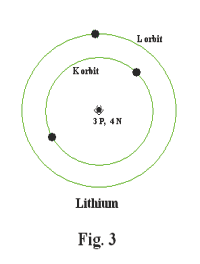
If an atom contains 3 protons and 4 neutrons then atom will be of Lithium element. The outermost orbit of Lithium has 1 Electron so it's valency could be +1 or -1. Protons and neutrons each have masses of 1 amu, while the mass of electrons is negligible. Therefore, 3 protons and 4 neutrons equals a mass of 7 amu. Become a member and unlock all Study Answers. The positively charged protons tend to repel each other, but the neutrons help to hold the nucleus together. The number of protons is the atomic number, and the number of protons plus neutrons is the atomic mass. For hydrogen, the atomic mass is 1 because there is one proton and no neutrons. For helium, it is 4: two protons and two neutrons. Yes, because electrons only go on the outside of the electron shell and the first level can only hold two electrons.Protons & neutrons can only go in the middle of the atom. An atom with 3 protons and 4 neutrons: b. An atom with 2 protons and 4 neutrons: c. An atom with 4 protons and 4 neutrons: Play with the simulation to discover which particles af ect the charge of an atom or ion. Neutral atoms have and electrons. Positive ions have.
| Elementary Particle | Charge | Mass |
|---|---|---|
| Proton | +1 | 1 |
| Neutron | 0 | 1 |
| Electron | −1 | ~0 |
The element hydrogen has the simplest atoms, each with just one proton and one electron. The proton forms the nucleus, while the electron orbits around it. All other elements have neutrons as well as protons in their nucleus, such as helium, which is depicted in Figure 2.2. The positively charged protons tend to repel each other, and the neutrons help to hold the nucleus together. The number of protons is the atomic number, and the number of protons plus neutrons is the atomic mass. For hydrogen, the atomic mass is 1 because there is one proton and no neutrons. For helium, it is 4: two protons and two neutrons.
For most of the 16 lightest elements (up to oxygen) the number of neutrons is equal to the number of protons. For most of the remaining elements, there are more neutrons than protons, because extra neutrons are needed to keep the nucleus together by overcoming the mutual repulsion of the increasing numbers of protons concentrated in a very small space. Geany for mac os. For example, silicon has 14 protons and 14 neutrons. Its atomic number is 14 and its atomic mass is 28. The most common isotope of uranium has 92 protons and 146 neutrons. Its atomic number is 92 and its atomic mass is 238 (92 + 146).
The dot in the middle is the nucleus, and the surrounding cloud represents where the two electrons might be at any time. The darker the shade, the more likely that an electron will be there. An angstrom (Å) is 10-10m . A femtometre (fm) is 10-15m. In other words, a helium atom’s electron cloud is about 100,000 times bigger than its nucleus.
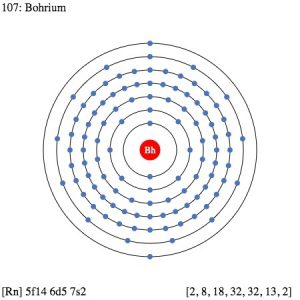
Electrons orbiting around the nucleus of an atom are arranged in shells — also known as “energy levels.” The first shell can hold only two electrons, while the next shell holds up to eight electrons. Subsequent shells can hold more electrons, but the outermost shell of any atom holds no more than eight electrons. The electrons in the outermost shell play an important role in bonding between atoms. Elements that have a full outer shell are inert in that they do not react with other elements to form compounds. They all appear in the far-right column of the periodic table: helium, neon, argon, etc. For elements that do not have a full outer shell, the outermost electrons can interact with the outermost electrons of nearby atoms to create chemical bonds. The electron shell configurations for 29 of the first 36 elements are listed in Table 2.2.

| Number of Electrons in Each Shell | ||||||
|---|---|---|---|---|---|---|
| Element | Symbol | Atomic No. | First | Second | Third | Fourth |
| Hydrogen | H | 1 | 1 | |||
| Helium | He | 2 | 2 | |||
| Lithium | Li | 3 | 2 | 1 | ||
| Beryllium | Be | 4 | 2 | 2 | ||
| Boron | B | 5 | 2 | 3 | ||
| Carbon | C | 6 | 2 | 4 | ||
| Nitrogen | N | 7 | 2 | 5 | ||
| Oxygen | O | 8 | 2 | 6 | ||
| Fluorine | F | 9 | 2 | 7 | ||
| Neon | Ne | 10 | 2 | 8 | ||
| Sodium | Na | 11 | 2 | 8 | 1 | |
| Magnesium | Mg | 12 | 2 | 8 | 2 | |
| Aluminum | Al | 13 | 2 | 8 | 3 | |
| Silicon | Si | 14 | 2 | 8 | 4 | |
| Phosphorus | P | 15 | 2 | 8 | 5 | |
| Sulphur | S | 16 | 2 | 8 | 6 | |
| Chlorine | Cl | 17 | 2 | 8 | 7 | |
| Argon | Ar | 18 | 2 | 8 | 8 | |
| Potassium | K | 19 | 2 | 8 | 8 | 1 |
| Calcium | Ca | 20 | 2 | 8 | 8 | 2 |
| Scandium | Sc | 21 | 2 | 8 | 9 | 2 |
| Titanium | Ti | 22 | 2 | 8 | 10 | 2 |
| Vanadium | V | 23 | 2 | 8 | 11 | 2 |
| Chromium | Cr | 24 | 2 | 8 | 13 | 1 |
| Manganese | Mn | 25 | 2 | 8 | 13 | 2 |
| Iron | Fe | 26 | 2 | 8 | 14 | 2 |
| . | . | . | . | . | . | . |
| Selenium | Se | 34 | 2 | 8 | 18 | 6 |
| Bromine | Br | 35 | 2 | 8 | 18 | 7 |
| Krypton | Kr | 36 | 2 | 8 | 18 | 8 |
Attributions
Figure 2.2
Helium Atom by Yzmo is under CC-BY-SA-3.0
Overview of Atomic Structure
Atoms are made up of particles called protons, neutrons, and electrons, which are responsible for the mass and charge of atoms.
Learning Objectives
Discuss the electronic and structural properties of an atom
Key Takeaways
Key Points
An Atom With 3 Protons And 4 Neutrons Is
- An atom is composed of two regions: the nucleus, which is in the center of the atom and contains protons and neutrons, and the outer region of the atom, which holds its electrons in orbit around the nucleus.
- Protons and neutrons have approximately the same mass, about 1.67 × 10⁻²⁴ grams, which scientists define as one atomic mass unit (amu) or one Dalton.
- Each electron has a negative charge (-1) equal to the positive charge of a proton (+1).
- Neutrons are uncharged particles found within the nucleus.
Key Terms
- atom: The smallest possible amount of matter which still retains its identity as a chemical element, consisting of a nucleus surrounded by electrons.
- proton: Positively charged subatomic particle forming part of the nucleus of an atom and determining the atomic number of an element. It weighs 1 amu.
- neutron: A subatomic particle forming part of the nucleus of an atom. It has no charge. It is equal in mass to a proton or it weighs 1 amu.
An Atom With 3 Protons And 4 Neutrons Is Called
An atom is the smallest unit of matter that retains all of the chemical properties of an element. Atoms combine to form molecules, which then interact to form solids, gases, or liquids. For example, water is composed of hydrogen and oxygen atoms that have combined to form water molecules. Many biological processes are devoted to breaking down molecules into their component atoms so they can be reassembled into a more useful molecule.
Atomic Particles
Atoms consist of three basic particles: protons, electrons, and neutrons. The nucleus (center) of the atom contains the protons (positively charged) and the neutrons (no charge). The outermost regions of the atom are called electron shells and contain the electrons (negatively charged). Atoms have different properties based on the arrangement and number of their basic particles.
The hydrogen atom (H) contains only one proton, one electron, and no neutrons. This can be determined using the atomic number and the mass number of the element (see the concept on atomic numbers and mass numbers).
Structure of an atom: Elements, such as helium, depicted here, are made up of atoms. Atoms are made up of protons and neutrons located within the nucleus, with electrons in orbitals surrounding the nucleus.
Atomic Mass
Protons and neutrons have approximately the same mass, about 1.67 × 10⁻²⁴ grams. Scientists define this amount of mass as one atomic mass unit (amu) or one Dalton. Although similar in mass, protons are positively charged, while neutrons have no charge. Therefore, the number of neutrons in an atom contributes significantly to its mass, but not to its charge.
Electrons are much smaller in mass than protons, weighing only 9.11 × 10⁻²⁸ grams, or about 1/1800 of an atomic mass unit. Therefore, they do not contribute much to an element’s overall atomic mass. When considering atomic mass, it is customary to ignore the mass of any electrons and calculate the atom’s mass based on the number of protons and neutrons alone.
Electrons contribute greatly to the atom’s charge, as each electron has a negative charge equal to the positive charge of a proton. Scientists define these charges as “+1” and “-1. ” In an uncharged, neutral atom, the number of electrons orbiting the nucleus is equal to the number of protons inside the nucleus. In these atoms, the positive and negative charges cancel each other out, leading to an atom with no net charge.
Protons, neutrons, and electrons: Both protons and neutrons have a mass of 1 amu and are found in the nucleus. However, protons have a charge of +1, and neutrons are uncharged. Electrons have a mass of approximately 0 amu, orbit the nucleus, and have a charge of -1.
Exploring Electron Properties: Compare the behavior of electrons to that of other charged particles to discover properties of electrons such as charge and mass.
Volume of Atoms
Accounting for the sizes of protons, neutrons, and electrons, most of the volume of an atom—greater than 99 percent—is, in fact, empty space. Despite all this empty space, solid objects do not just pass through one another. The electrons that surround all atoms are negatively charged and cause atoms to repel one another, preventing atoms from occupying the same space. These intermolecular forces prevent you from falling through an object like your chair.
Interactive: Build an Atom: Build an atom out of protons, neutrons, and electrons, and see how the element, charge, and mass change. Then play a game to test your ideas!
Atomic Number and Mass Number
The atomic number is the number of protons in an element, while the mass number is the number of protons plus the number of neutrons.
Learning Objectives
Determine the relationship between the mass number of an atom, its atomic number, its atomic mass, and its number of subatomic particles
Key Takeaways
Key Points
- Neutral atoms of each element contain an equal number of protons and electrons.
- The number of protons determines an element’s atomic number and is used to distinguish one element from another.
- The number of neutrons is variable, resulting in isotopes, which are different forms of the same atom that vary only in the number of neutrons they possess.
- Together, the number of protons and the number of neutrons determine an element’s mass number.
- Since an element’s isotopes have slightly different mass numbers, the atomic mass is calculated by obtaining the mean of the mass numbers for its isotopes.
Key Terms
- mass number: The sum of the number of protons and the number of neutrons in an atom.
- atomic number: The number of protons in an atom.
- atomic mass: The average mass of an atom, taking into account all its naturally occurring isotopes.
Atomic Number
Neutral atoms of an element contain an equal number of protons and electrons. The number of protons determines an element’s atomic number (Z) and distinguishes one element from another. For example, carbon’s atomic number (Z) is 6 because it has 6 protons. The number of neutrons can vary to produce isotopes, which are atoms of the same element that have different numbers of neutrons. The number of electrons can also be different in atoms of the same element, thus producing ions (charged atoms). For instance, iron, Fe, can exist in its neutral state, or in the +2 and +3 ionic states.
Mass Number

An element’s mass number (A) is the sum of the number of protons and the number of neutrons. The small contribution of mass from electrons is disregarded in calculating the mass number. This approximation of mass can be used to easily calculate how many neutrons an element has by simply subtracting the number of protons from the mass number. Protons and neutrons both weigh about one atomic mass unit or amu. Isotopes of the same element will have the same atomic number but different mass numbers.
Atomic number, chemical symbol, and mass number: Carbon has an atomic number of six, and two stable isotopes with mass numbers of twelve and thirteen, respectively. Its average atomic mass is 12.11. Photoshop cs6 for mac cracked torrent.
Scientists determine the atomic mass by calculating the mean of the mass numbers for its naturally-occurring isotopes. Often, the resulting number contains a decimal. For example, the atomic mass of chlorine (Cl) is 35.45 amu because chlorine is composed of several isotopes, some (the majority) with an atomic mass of 35 amu (17 protons and 18 neutrons) and some with an atomic mass of 37 amu (17 protons and 20 neutrons).
Given an atomic number (Z) and mass number (A), you can find the number of protons, neutrons, and electrons in a neutral atom. For example, a lithium atom (Z=3, A=7 amu) contains three protons (found from Z), three electrons (as the number of protons is equal to the number of electrons in an atom), and four neutrons (7 – 3 = 4).
Isotopes
Isotopes are various forms of an element that have the same number of protons, but a different number of neutrons.
Learning Objectives
Discuss the properties of isotopes and their use in radiometric dating
Key Takeaways
All Elements Protons Neutrons Electrons
Key Points
- Isotopes are atoms of the same element that contain an identical number of protons, but a different number of neutrons.
- Despite having different numbers of neutrons, isotopes of the same element have very similar physical properties.
- Some isotopes are unstable and will undergo radioactive decay to become other elements.
- The predictable half-life of different decaying isotopes allows scientists to date material based on its isotopic composition, such as with Carbon-14 dating.
Key Terms
- isotope: Any of two or more forms of an element where the atoms have the same number of protons, but a different number of neutrons within their nuclei.
- half-life: The time it takes for half of the original concentration of an isotope to decay back to its more stable form.
- radioactive isotopes: an atom with an unstable nucleus, characterized by excess energy available that undergoes radioactive decay and creates most commonly gamma rays, alpha or beta particles.
- radiocarbon dating: Determining the age of an object by comparing the ratio of the 14C concentration found in it to the amount of 14C in the atmosphere.
What is an Isotope?
Isotopes are various forms of an element that have the same number of protons but a different number of neutrons. Some elements, such as carbon, potassium, and uranium, have multiple naturally-occurring isotopes. Isotopes are defined first by their element and then by the sum of the protons and neutrons present.
- Carbon-12 (or 12C) contains six protons, six neutrons, and six electrons; therefore, it has a mass number of 12 amu (six protons and six neutrons).
- Carbon-14 (or 14C) contains six protons, eight neutrons, and six electrons; its atomic mass is 14 amu (six protons and eight neutrons).
While the mass of individual isotopes is different, their physical and chemical properties remain mostly unchanged.
Isotopes do differ in their stability. Carbon-12 (12C) is the most abundant of the carbon isotopes, accounting for 98.89% of carbon on Earth. Carbon-14 (14C) is unstable and only occurs in trace amounts. Unstable isotopes most commonly emit alpha particles (He2+) and electrons. Neutrons, protons, and positrons can also be emitted and electrons can be captured to attain a more stable atomic configuration (lower level of potential energy ) through a process called radioactive decay. The new atoms created may be in a high energy state and emit gamma rays which lowers the energy but alone does not change the atom into another isotope. These atoms are called radioactive isotopes or radioisotopes.
Radiocarbon Dating
Carbon is normally present in the atmosphere in the form of gaseous compounds like carbon dioxide and methane. Carbon-14 (14C) is a naturally-occurring radioisotope that is created from atmospheric 14N (nitrogen) by the addition of a neutron and the loss of a proton, which is caused by cosmic rays. This is a continuous process so more 14C is always being created in the atmosphere. Once produced, the 14C often combines with the oxygen in the atmosphere to form carbon dioxide. Carbon dioxide produced in this way diffuses in the atmosphere, is dissolved in the ocean, and is incorporated by plants via photosynthesis. Animals eat the plants and, ultimately, the radiocarbon is distributed throughout the biosphere.
In living organisms, the relative amount of 14C in their body is approximately equal to the concentration of 14C in the atmosphere. When an organism dies, it is no longer ingesting 14C, so the ratio between 14C and 12C will decline as 14C gradually decays back to 14N. This slow process, which is called beta decay, releases energy through the emission of electrons from the nucleus or positrons.
Protons Neutrons And Electrons Quiz
After approximately 5,730 years, half of the starting concentration of 14C will have been converted back to 14N. This is referred to as its half-life, or the time it takes for half of the original concentration of an isotope to decay back to its more stable form. Because the half-life of 14C is long, it is used to date formerly-living objects such as old bones or wood. Comparing the ratio of the 14C concentration found in an object to the amount of 14C in the atmosphere, the amount of the isotope that has not yet decayed can be determined. On the basis of this amount, the age of the material can be accurately calculated, as long as the material is believed to be less than 50,000 years old. This technique is called radiocarbon dating, or carbon dating for short.
Application of carbon dating: The age of carbon-containing remains less than 50,000 years old, such as this pygmy mammoth, can be determined using carbon dating.
Other elements have isotopes with different half lives. For example, 40K (potassium-40) has a half-life of 1.25 billion years, and 235U (uranium-235) has a half-life of about 700 million years. Scientists often use these other radioactive elements to date objects that are older than 50,000 years (the limit of carbon dating). Through the use of radiometric dating, scientists can study the age of fossils or other remains of extinct organisms.